

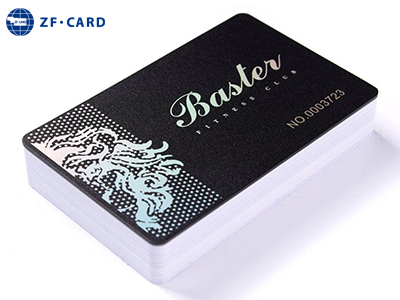
Against the backdrop of accelerating digital management and intelligent transformation, enterprises are facing growing demands for identity authentication, data collection, and automated operations. From hotels and office buildings to industrial parks, transportation systems, membership programs, and smart parking facilities, RFID cards are increasingly becoming a fundamental component of modern infrastructure.
Compared with traditional magnetic stripe cards or barcode systems, RFID technology offers contactless reading, higher efficiency, and enhanced security, providing businesses with a more stable and scalable management approach. This article provides a comprehensive overview of RFID cards, covering their definition, working principles, main types, core characteristics, and key business applications. It also explains why custom RFID cards are critical for enterprise-level projects, helping procurement teams and system integrators make more informed selection decisions.
What is the RFID Card
RFID cards is far more than a simple plastic card; it is a smart data carrier integrated with radio frequency identification technology. RFID cards communicate wirelessly with readers through radio waves, enabling identity verification, information storage, and data exchange.
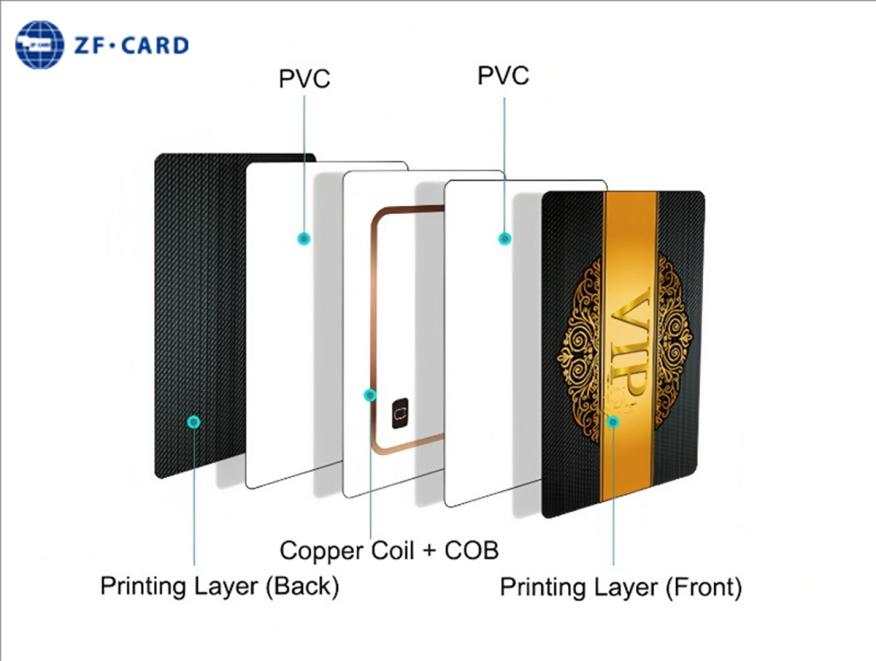
A typical RFID chip card consists of three core components: an RFID chip, an antenna, and a card substrate. The chip handles data storage and logical processing, the antenna transmits and receives radio signals, and the substrate determines the card’s physical strength, durability, and appearance. Common materials include PVC, PET, and ABS, each suited to different environments and lifespan requirements.
Unlike magnetic stripe cards, RFID cards do not require physical contact during reading. This minimizes wear and tear while significantly improving transaction speed, making RFID cards a standard element in modern intelligent management systems.
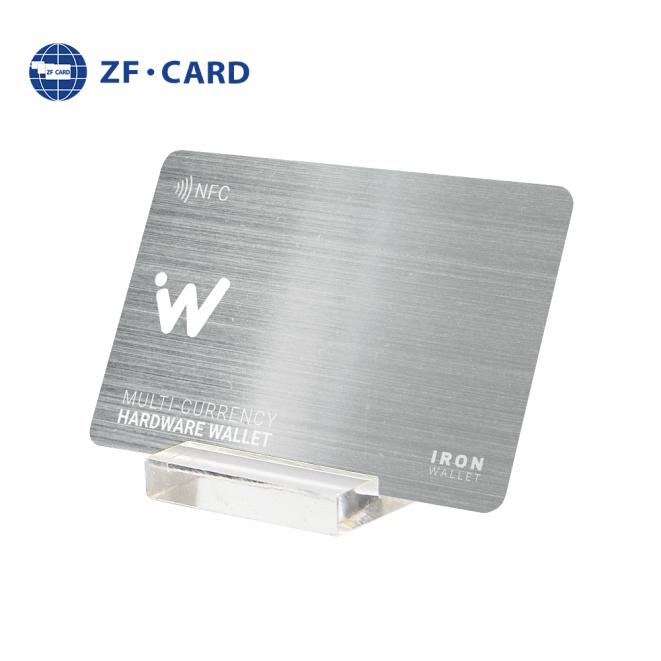
How Does the RFID Card Work
The working principle of RFID cards is based on electromagnetic induction and radio frequency communication. When a card enters the electromagnetic field generated by a reader, it receives energy and transmits data wirelessly back to the system.
First, the reader continuously emits electromagnetic waves at a specific frequency, such as 125 kHz or 13.56 MHz. When an RFID chip card approaches, its internal antenna cuts through the magnetic field, generating a small induced current.
This current is then rectified to power the chip. Once activated, the chip modulates the data stored in its EEPROM according to predefined protocols and sends it back via the antenna. The reader receives, demodulates, and decodes the signal before transmitting the data to the backend management system for verification.
Many modern RFID cards also support encryption and multi-level access control, further enhancing system security.
Different Types of RFID Chip Card
Based on operating frequency, RFID chip cards are generally categorized into low frequency (LF), high frequency (HF), and ultra-high frequency (UHF). Each type differs in reading distance, stability, and suitable applications.
1. Low-Frequency RFID Cards
Low-frequency RFID cards operate at 125 kHz and are widely used for access control, hotel systems, and basic identity management. Known for their stability and strong environmental adaptability, they are a common choice for RFID key cards and RFID ID cards.
Key characteristics include:
• Short reading distance with highly reliable recognition.
• Strong resistance to interference from metal, moisture, and complex environments.
• Mature chip technology and cost-effective deployment.
Due to their reliability and compatibility, LF RFID cards are ideal for custom RFID card solutions in hotels, office buildings, and foundational smart RFID systems.
2. High-Frequency RFID Cards
High-frequency RFID cards typically operate at 13.56 MHz. Compared with LF cards, they offer faster data transmission and larger storage capacity, making them suitable for multi-function and higher-security applications.
Key characteristics include:
• Larger data capacity for more complex information storage.
• Faster reading speed, ideal for multifunctional systems.
• Greater sensitivity to environmental conditions.
3. Ultra-High Frequency RFID Cards
Ultra-high frequency RFID cards are designed for long-range and batch reading applications and are commonly used in logistics, warehousing, and asset management.
Key characteristics include:
• Long reading distance for wide-area identification.
• Ability to read multiple cards simultaneously.
• Higher requirements for environmental conditions and system design.
Key Characteristics of RFID Cards
The core advantages of RFID cards lie in their contactless operation, speed, security, durability, and customization flexibility.
1. Contactless Communication
Contactless operation is the most fundamental feature of RFID technology. Users do not need to physically touch or precisely align the card with the reader—data exchange occurs as long as the card is within range. This convenience is especially valuable in high-traffic scenarios such as public transportation and access control systems using RFID key cards. The absence of physical contact also significantly extends the lifespan of both cards and readers.
2. Large and Rewritable Data Storage
Unlike barcodes, which store very limited information, RFID chip cards provide storage capacities ranging from tens of bytes to several kilobytes or more. Data can be divided into multiple sectors for different purposes. Most RFID cards are rewritable, allowing information such as access rights, stored value, or RFID parking management card records to be updated as business needs evolve.
3. High Security
RFID cards offer multi-layered security protection. Each card contains a globally unique UID that is difficult to duplicate. Many chips also support encryption algorithms to protect data during transmission, along with password authentication and access control. These features make RFID cards suitable for applications requiring high security, such as payments and identity verification.
4. Strong Environmental Adaptability and Durability
With chips and antennas fully encapsulated within the card substrate, RFID cards are resistant to water, dust, magnetic interference, and surface contamination. They perform reliably in industrial or outdoor environments and are far more durable than magnetic stripe or contact IC cards—an essential advantage for long-term applications such as asset tracking and employee identification.
Key Applications of RFID Cards
Thanks to their technical advantages, RFID cards are widely used across modern business environments to enhance efficiency, security, and user experience.
1. Access Control and Office Security Management
In office buildings, industrial parks, and commercial complexes, access control is one of the most established applications of RFID cards. RFID-based systems enable precise control of personnel movement while improving overall security and operational efficiency.
Here, RFID chip cards serve as identity credentials linked to access controllers and backend systems. Compared with traditional keys or password-based solutions, RFID access control offers faster response times and higher reliability, even under heavy usage.
Through custom RFID cards, enterprises can assign different permissions by department, area, or time period, enabling fine-grained access management tailored to organizational needs.
2. Hotel Management and RFID Key Cards
In the hospitality industry, RFID key cards have replaced mechanical keys as the standard solution. Beyond room access, hotel RFID cards connect front-desk systems, room management, and energy control.
RFID hotel cards provide stable recognition and strong resistance to interference. When integrated with hotel management systems, they support features such as check-in binding and automatic expiration, reducing administrative risk. Custom-designed RFID cards also enhance brand presentation and guest experience.
3. Employee Identification and RFID ID Cards
In enterprises, campuses, and healthcare facilities, RFID ID cards play a vital role in identity management. These cards often support multiple functions, including access control, attendance tracking, and payment.
By combining stable RFID technology with custom design, custom RFID cards meet both operational requirements and branding needs, serving as practical tools and visual identity carriers.
4. Parking and Vehicle Access Management
In transportation and parking systems, RFID parking management cards provide an efficient and automated solution for vehicle access control. Compared with manual verification or paper tickets, RFID significantly improves traffic flow and reduces congestion.
RFID cards can be bound to vehicle information for automatic identification and permission verification. When deployed as part of a complete smart RFID card solution, parking operators benefit from automated billing, data analytics, and remote management, reducing operating costs while improving service quality.
Why Custom RFID Cards Matter for Business
A custom RFID card not only strengthens brand identity but also enables precise customization for security, performance, and system requirements, delivering a more competitive smart RFID solution.
1. Ensuring System Compatibility and Stability
By defining chip models and operating frequencies during customization, businesses can ensure full compatibility with existing readers. This proactive approach minimizes integration risks and enhances long-term system stability.
2. Improving Long-Term Cost Efficiency
Customized RFID cards allow targeted optimization of materials, printing processes, and chip configurations. Selecting durable materials and stable chip solutions extends card lifespan and reduces replacement costs, especially in high-usage environments.
3. Supporting Brand Identity and Professional Image
RFID cards are also visual touchpoints. Through custom RFID card design—logos, colors, and patterns—enterprises can reinforce brand recognition while maintaining technical reliability.
4. Enabling Flexible Data and Permission Management
Custom chip configurations allow a single RFID card to support multiple functions, such as access control, identification, and permission management. This flexibility is essential for building comprehensive smart RFID card solutions.
How to Choose the Most Suitable RFID Card
Selecting the right RFID card is a strategic decision that directly affects system performance, user experience, and long-term operating costs.
1. Define the Application Scenario
Different environments impose different requirements on frequency, durability, and stability. High-frequency usage scenarios such as hotels and office access control prioritize reliability over reading distance, making LF RFID cards a practical choice.
2. Select the Right RFID Chip Based on System Compatibility
Chip selection determines whether a system operates smoothly. Even visually identical cards may differ significantly in protocol and storage. Confirming reader compatibility in advance prevents costly system redesigns.
3. Evaluate Printing Quality and Customization Capability
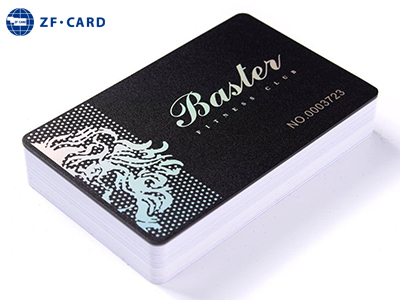
In hospitality and membership applications, print quality directly influences user perception. High-quality RFID cards use professional offset printing for long-lasting color accuracy. Customization options such as logos, serial numbers, and laser engraving enhance both functionality and brand presentation.
Conclusion
RFID cards have become an essential component of modern intelligent management systems. As a professional RFID card manufacturer, ZFCard offers a complete production system backed by international certifications such as CE, RoHS, FSC, and FCC. From pre-sales consultation and free design samples to after-sales technical support, ZFCard delivers comprehensive RFID solutions rather than just products. For businesses seeking a reliable RFID card manufacturer, ZFCard is a trusted long-term partner.
FAQ(H2)
Q1: What is the practical difference between standard RFID cards and custom RFID cards?
A1: Standard RFID cards meet basic identification needs, while custom RFID cards allow tailored chip selection, encoding methods, and card finishes. In real-world applications, customized cards offer superior compatibility, durability, and branding—especially for hotels, corporate campuses, and commercial complexes.
Q2: How can you evaluate whether an RFID card manufacturer is reliable?
A2: Key evaluation factors include ODM/OEM experience, chip selection expertise, quality control systems, delivery capability, and after-sales support. Manufacturers with proven experience and international certifications are better suited for long-term cooperation.
Q3: What are the core advantages of RFID cards compared with magnetic stripe or barcode cards?
A3: RFID cards support contactless reading, faster processing, longer service life, encryption, and multi-card recognition, making them ideal for high-frequency and security-sensitive applications.
Q4: How should different RFID frequencies (LF / HF / UHF) be selected?
A4: Frequency selection depends on reading distance, environment, and application. LF is ideal for short-range and interference-resistant scenarios, HF is commonly used for access control and payment, while UHF is suited for long-range and bulk identification in logistics and warehousing.